
Out of the power trap
Only a new way of organising power can lead to the changes we need.

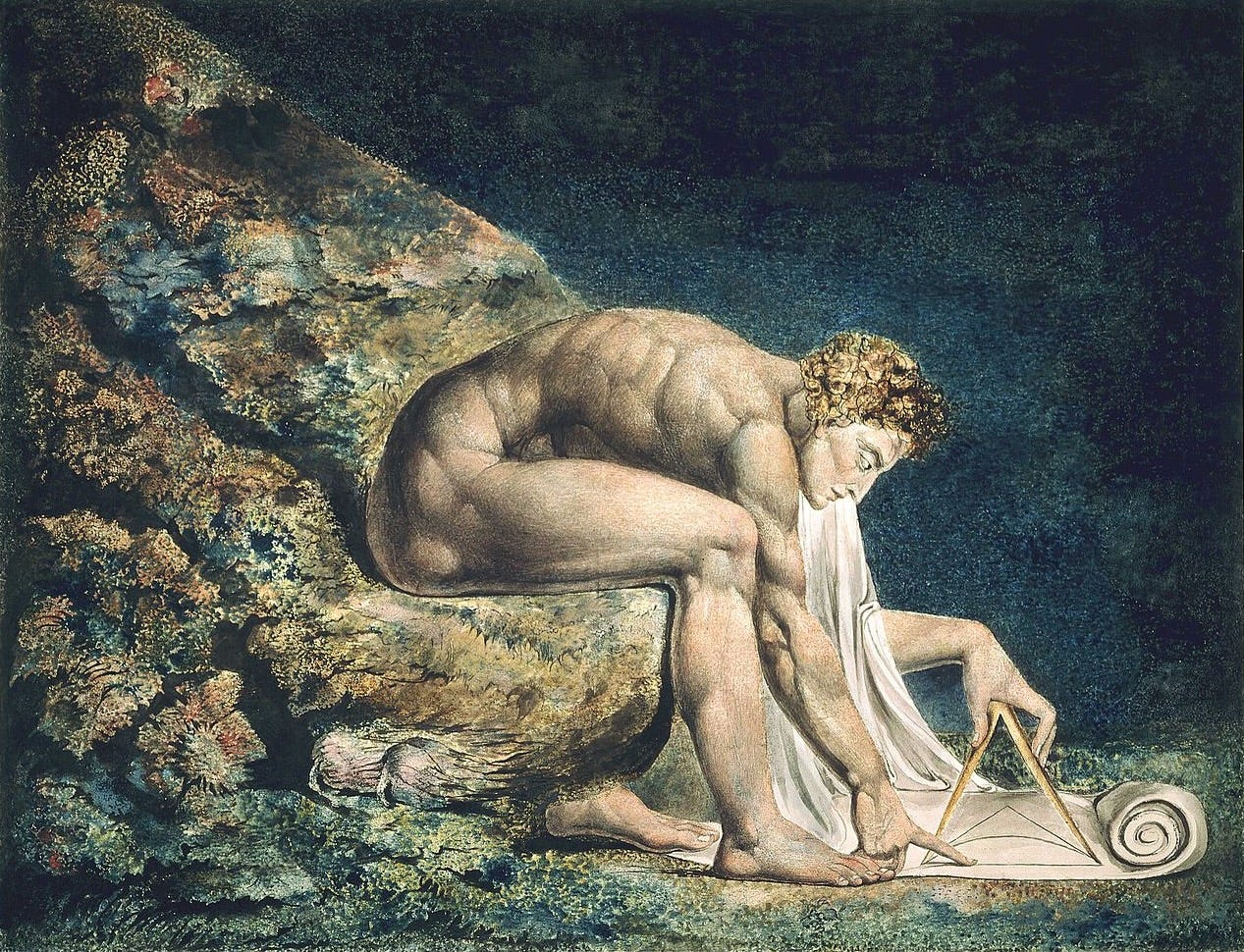
We are caught in a power trap. All of our best efforts to build a kinder and more beautiful world are doomed to either remain small and weak, or to slowly morph into yet another feature of the very systems causing our biggest problems. There is a way out but only one: a new way of organising power. It is already emerging all around us, and yet is not properly understood. Our steps towards it are haphazard and stumbling. We take many wrong turns. If we are to escape the trap before our situation turns dire, nothing could be more important than better understanding how power works, and how it can work differently.
The biggest wrong turn we make is away from hierarchy. For as long as power hierarchies have existed, they have been coercive and toxic, so figuring out how to avoid them seems like the best way forward, but in doing so we remain stuck. A credo popular in some forward-thinking business circles captures the confusion: power with not power over. It sounds right, but worldly power must be over something or it is not power at all. Power-with only leads to social change when it creates power-over, it is not an alternative. To organise power is to create hierarchy. When today’s progressive organisations are ambivalent or opposed to hierarchy they unwittingly undermine themselves. Equal power everywhere is power disorganised. It is weak or even destructive. This is plainly obvious in nature, it is the desert or the locust swarm.
This is precisely the power trap: when the only ways we know to organise power are toxic, we either build the hierarchies and accept the price, or we dismantle them and our power too. Escaping will require a system of power strong enough to displace the toxic kinds we know. That will mean more hierarchy, not less, but of an entirely different kind. A non-coercive power hierarchy might sound like a contradiction in terms, but there is a way to make it possible. To learn how, we need to start at the beginning.
From the earliest civilisations until today, organising power into large hierarchies is by far the most consequential thing we humans do. For about 300,000 years we were just another animal jostling for survival, until we discovered the power of myth, or story power. Our belief in stories, especially stories about gods, can be so strong we will submit our own freedom to them. The hierarchical power this unlocked was so great we conquered the world, but the results for most were catastrophic — large-scale society meant large-scale epidemics, famine, war and slavery. We have been in the power trap since the dawn of agriculture and cities, an inescapable consequence of the very breakthrough that made those possible.
Here’s why: when our power-organising lever is belief, the negative gets an inexorable systemic advantage — the painful emotions just punch harder. Sure, you can bring people together around a story of “mercy, pity, peace and love” as Blake beautifully put it, but someone with a story of fear, anger or sadness will take your power as sure as night follows day. Thus Christianity starts out as love-your-enemy and later becomes the Crusades and the Inquisition. Run it again, the exact same thing will happen. Power corrupts vastly more than we realise, but we misunderstand how. It’s not about people abandoning their values, it’s about what happens to the system.
Only a new power-organising principle can get us out, and history tells us it is indeed possible: thousands of years later we did it again. An entirely new way to organise power proved even more effective than the first: the power of mechanism: machine power. An idea so powerful the entire world now dances in step to its central tune: make money. We gained technological miracles and the comforts of kings, but along with them came an entirely new power trap. Now we contend with destruction on a scale almost impossible to comprehend: of the natural world, of our social fabric, of our own hearts and minds.
The new power trap is the exact opposite of the first. Where story power forces you into a story not your own (the king is descended from the gods, nobility is in the blood), machine power forces you out of story altogether. Now you are just a cog. Yes, machines can do either good or bad but that misses the point. If you want to treat people and nature as complex living wholes, someone who treats them as replaceable parts will take your power. Their machine just works better than yours. Once again the relentless systemic advantage is an inescapable consequence of the way we organise power. It will not end, it cannot end, without a third breakthrough.
Must we simply wait and hope, or can we seek it out purposefully? It turns out there is a remarkable pattern at work here for us to follow, recognised and articulated again and again by a wealth of great thinkers from philosophy, science and spirituality, across dozens of fields of inquiry and wisdom traditions. We find it in Blake’s marriage of contraries, in Hegel’s sublation, in Jung’s integration of polarities, in the held opposites of Lao Tzu, in the bow and lyre of Heraclitus, in Whitehead’s concrescence, in Schumacher’s divergent problems, in Wilber’s transcend and include. It shows up in the particle and the wave, in the two hemispheres of the brain, in the maxim of the French Revolution, in the tonic and dominant of music, in the growth of a child, or a galaxy, in winter and summer, in night and day, in root and shoot. And it shows up, crucially, in story power and machine power, pointing insistently to the possibility of something better.
In every case, three key stages: a ground state, an opposition or rupture, then integration into something higher. Applied to the history of power the pattern reveals a great shaping force of human history that has been largely overlooked or misunderstood. If we look more carefully, three vital insights emerge.
Firstly, a new way of being and working together fits the pattern remarkably well, emerging all around us in new books and new businesses, in online conversation and community projects. The integrative phase of power is already taking shape. Secondly, it suggests this new kind of power will be not only greater, but different to the point of reversal: not toxic but healing, not fearful but loving. Thirdly, and most valuable of all, we can better understand what we need to do. This is urgently needed, because the destruction of story power and machine power rages on. We do not yet wield this new power sufficiently well to overcome them.
We will look at this pattern in proper detail in due course. In doing so we will notice that the three stages of the pattern have certain characteristics that show up again and again. For example, systems in the first stage tend to be dependent on something: they receive. In the second stage we see independence and individualism: they take. In the integrative stage, the system becomes a creative source itself: it gives. In this shift to giving we can find the possibility of a very different kind of hierarchy.
The meaning intended by power with not power over is that shared creative capacity is better than authority. This is true and incredibly important, but it will not get us out of the trap. Consider an example: the best band in town has such capacity. When you choose their gig over a mediocre one, you grow their audience size, giving them more power over the local music scene and more opportunities to play. Perhaps the mediocre band are forced to keep their day jobs. As soon as power-with does anything practical it creates power-over, it creates hierarchy, but here’s the twist: far from being resented, this kind of hierarchy is celebrated. Great artists are some of our greatest heroes. They are not forced upon us but rather we choose them. Hierarchy without coercion. The shift we need is not from power-over to power-with, it is from power-taken to power-given.
How might this solve the power trap? As we saw, the organising principle of story power is belief. The power trap is that it’s easier to control people with the negative emotions. Next, the organising principle of machine power is rules. The power trap is that alienated people and “natural resources” are more amenable to rules than are complex, living wholes. When hierarchy is formed with gifts, giving becomes the power-organising principle. To have more power is to attract more giving. In such systems we will strive to be more valuable to others, more generous, more loving. Instead of a trap keeping us down, our power structures will start to lift us up. I call it living power.
If all this is true, it could turn the world upside down, but only if it actually works better. We know that our early ancestors lived in gift economies and the suggestion that we might benefit from revisiting these ideas is not a new one. But the question of how gift exchange could again become prominent in the extreme complexity of the modern economy is entirely unanswered. What is needed is not a vague appeal to the merits of giving but deep insight into a more mature relationship with power. This is exactly what can be found in the wisdom of polarity integration, which is the main topic we will be exploring. The lessons therein are truly profound, and align astonishingly well with the best practices already emerging in progressive organisations around the world. Perhaps most encouraging of all, we will learn that living power is best fostered not by businesses and ownership, but by community bonded by gift. This is why I believe that the future of power lies in community, and that the most dynamic businesses to come will understand themselves as hosts of such communities.
When machine power first began its rise to dominance (I’d perhaps put the key moment at 1602, with the founding of the Dutch East India Company), the holders of great story power had not a clue what was happening. Everyone still believed that kings and queens were the most powerful people in the world and continued to act accordingly, but the money began to flow elsewhere. If there is a bright future ahead, I believe it is because something similar is happening right now. Power will start to flow slowly but steadily towards creative and loving community. Note carefully: not should flow that way, because of a moral imperative, but will do because that is simply the behaviour of the system if living power is present. Indeed I believe nothing else can possibly get us out of the trap we’re in.